Tooth loss is an unfortunately common problem that can make it difficult to chew thoroughly, speak clearly, and smile proudly. Thankfully, dental implants allow lost teeth to be replaced with gorgeous and functional restorations that look, feel, and work just like the real thing. Here’s a quick look at how dental implants work and a few factors that can determine most of the cost of placing them.
What Are Dental Implants?
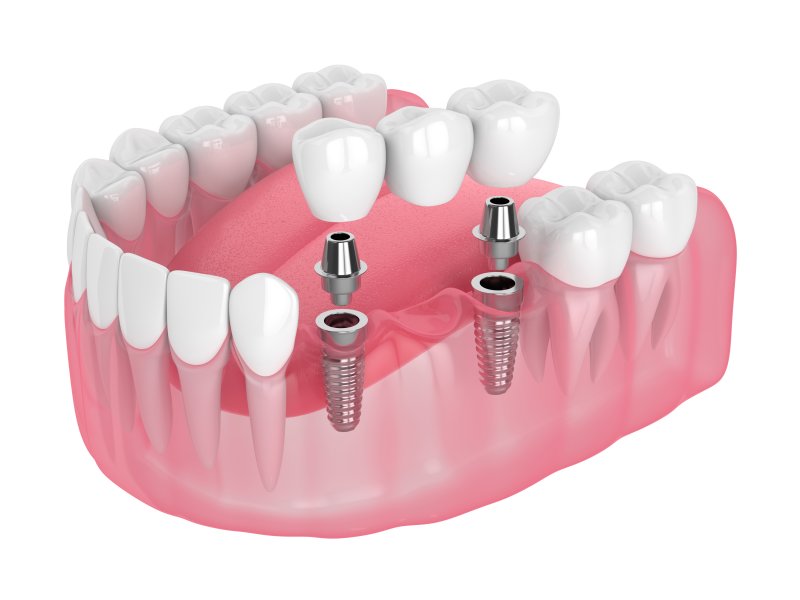
Dental implants are small titanium rods designed to be surgically inserted into the jawbone. Once placed, they will gradually fuse with their surrounding bone structure through the natural process of osseointegration, which will establish the sturdy foundation the devices need to work like real teeth.
After the surgical area has healed, the implant or implants will be fitted with a lifelike prosthetic appliance such as a crown, bridge, or denture. Implant-supported restorations can last much longer than traditional devices, and the implants themselves can last for decades or possibly for life if they receive excellent care. In many cases, implant patients save money in the long run since they don’t have to pay for replacement restorations as frequently.
What Factors Can Help Determine the Price of a Dental Implant?
The cost of a person’s dental implant treatment will be determined by a variety of factors such as:
- Preliminary treatments: A suitable dental implant candidate will be free from oral infections, so we may have to perform restorative work to resolve cavities and gum disease before a patient can receive the devices.
- Bone grafting: Some patients may need to have their jawbones reinforced before they can receive implants. We’ll be happy to refer someone to a trusted specialist for bone grafts.
- The number of implants: Each dental implant placed will be represented on the bill.
- The length of the implants: Longer implants cost more than shorter ones since they require more material.
- The type of restoration: Dental implants can support crowns, bridges, or dentures, and larger restorative devices that replace more teeth are generally more expensive since they require more time and material to craft.
Many dentists offer financing options that can help make the cost of dental implants more manageable, and insurance plan may offer some coverage for restorative treatments that may be necessary to make a patient a good candidate. Consulting with your oral healthcare provider can help you find the best way to replace your lost teeth.
About the Author
Dr. Bret Gilsdorf earned his dental degree at the University of Nebraska Medical Center and is a Fellow of the American Academy of Implant Prosthetics and the International Congress of Oral Implantologists. His office in Manhattan offers general, restorative, cosmetic, and emergency dentistry as well as implant services. To learn more about the dental implant placement process, contact his office online or dial (785) 539-2314.